
Federal Prison Release Paths
The BOP manages sentenced federal prisoners. Its directory sweep identified no institution physically located in Douglas County. A local arrest or temporary stay at Douglas County Jail does not become a BOP case merely because a federal hold appears. The booking agency, transfer record, federal register number, and court docket help identify the actual custodian.
A person leaving BOP may enter federal supervised release, state custody, ICE custody, or the community. BOP’s own explanation says a past Release Date with no institution displayed means the person left BOP custody on that date. That statement is limited to BOP. It does not certify that every sentence duty or other government hold ended.
Confirm a Federal Prison Release
Use the BOP Inmate Locator for sentenced federal custody and releases after 1982. Search by register, DCDC, FBI, or INS number when available. A name search can also use race, sex, and age. Match identifiers carefully before relying on the result.
- Choose number or name search based on the strongest identifier.
- Open the matching result and preserve the register number.
- Read the exact Release Date and institution fields.
- If the date is past and no facility appears, apply BOP’s own no-custody explanation only to BOP.
- Check the federal docket, supervision, state, or immigration system when another authority may continue.
Use the Douglas County release search instead when the person only stayed in the county jail.
Federal BOP Release Records
The public locator is the first federal sentenced-prison source. The BOP records explanation defines its release display and warns about data limits. BOP says the locator extract updates daily. A saved result should include the search date, number used, past release date, and absence or presence of a facility.
Federal Bureau of PrisonsNationwide sentenced-prison system
No BOP facility identified in Douglas County
Use the official locator and records channels
For a specific institution, use BOP’s official directory to locate its current records contact. No local BOP address or phone is invented because none was identified in Douglas County. A federal court order is obtained through the court or PACER, not from Douglas County Sheriff Records.
BOP Locator Record Meaning
The locator covers federal prisoners and people released from BOP custody after 1982. It is not an all-purpose federal custody archive. Some federal pretrial defendants can appear in BOP data even though USMS later moved them and a court released them without a further BOP update. The federal docket is more reliable for that pretrial path.
| System | What it establishes | What it does not establish |
|---|---|---|
| BOP locator | BOP custody or a displayed past BOP release | County jail, ICE, or all supervision |
| USMS | Federal pretrial transport and detention role | Public nationwide release archive |
| PACER or federal court | Orders and docket events | Physical exit time by itself |
| Douglas Sheriff | Local jail release or federal pickup recorded locally | Later federal outcome |
Federal Release Locator Screen
Open the official BOP locator before entering a federal register number or personal identifiers.
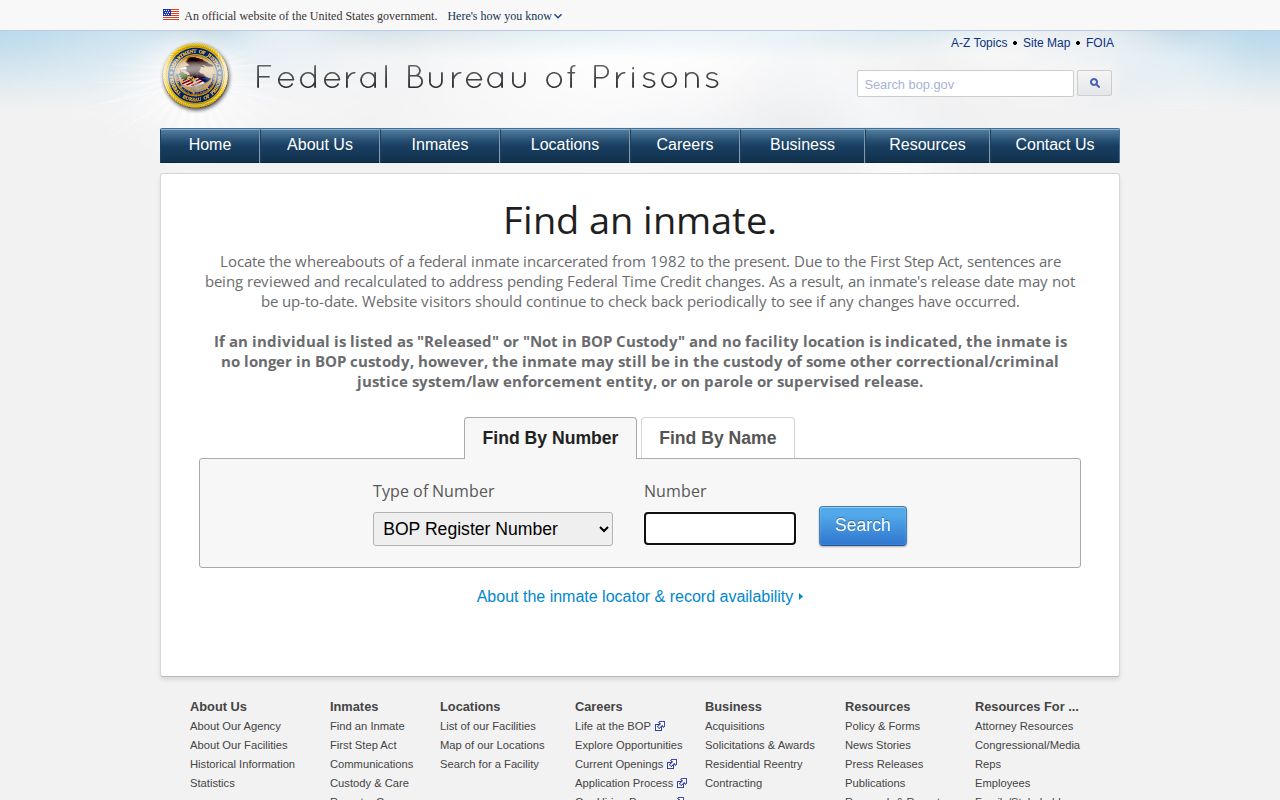
The captured search form identifies the right federal system. It does not show that a Douglas County detainee entered BOP custody.
A common name should be matched with age and a stable federal number where possible. Keep the literal result. “Not in BOP custody” is narrower and more accurate than “released from all custody.”
Read Federal Release Dates
The BOP help page gives the key interpretation: when Release Date is in the past and no facility is shown, the person was released from BOP custody on that date. The matching source capture preserves that explanation.
Read BOP’s federal inmate records explanation for current limitations.
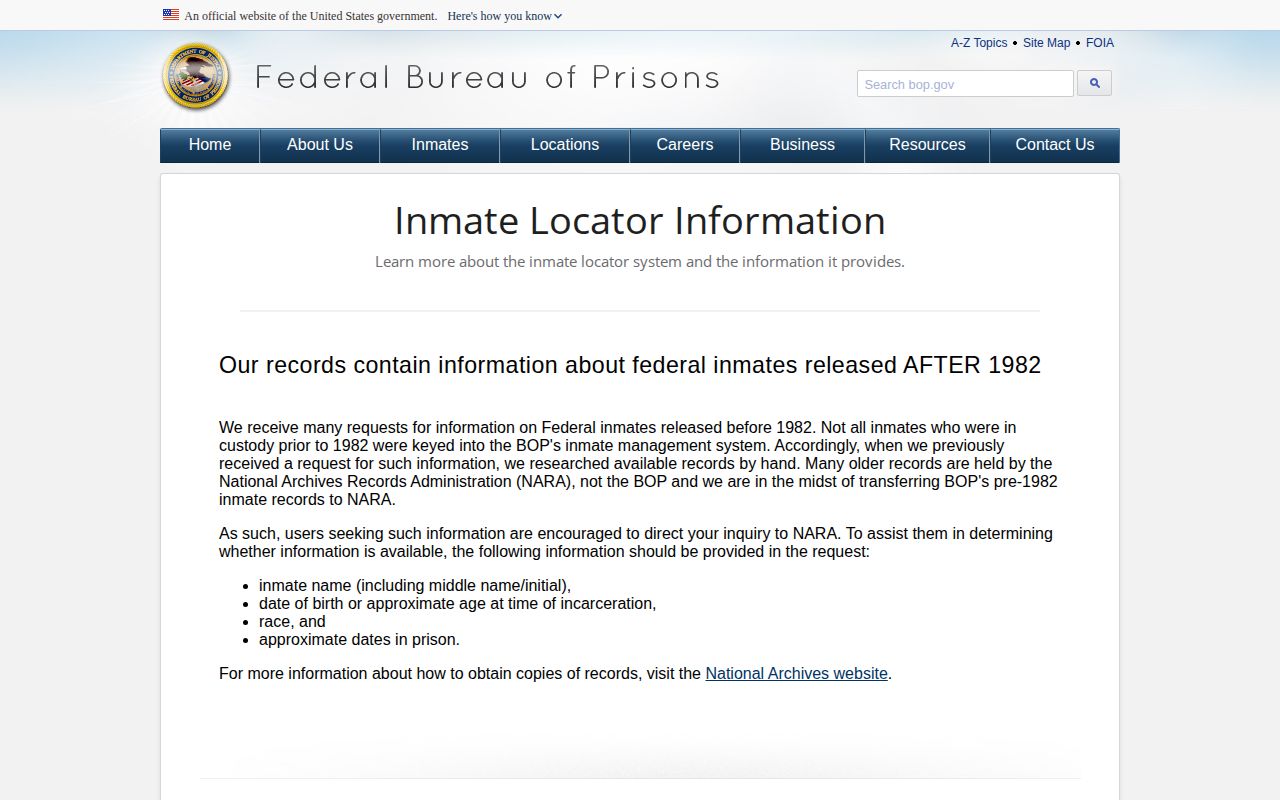
The explanation supports a BOP-only conclusion. Check the federal judgment for supervised release and another custodian for any transfer.
Federal Pretrial Release Records
USMS manages federal pretrial detention and can use contracted local beds. The physical building does not identify the legal custodian. If Douglas County Jail recorded a USMS hold or pickup, request the local transfer event, then use the federal court docket for the judicial outcome.
PACER provides federal case and order access, though an account and fees may apply. Search the correct district, verify the case number, and read the order rather than inferring release from a BOP no-result. USMS has no BOP-like nationwide public released-person archive.
For a solid federal record trail, keep the Sheriff transfer record, BOP result if applicable, federal order, and any later ICE or state status separate. Each source owns one segment. This is especially important when pretrial detention, sentencing, and immigration action occur in sequence.
If the BOP result shows an institution, use the official BOP facility directory for that institution’s current contact and records route. Do not infer a Douglas County connection from the facility name or from a local federal case alone. Sentenced people can be designated far from the court that imposed sentence.
A federal judgment may impose supervised release after imprisonment. That is community supervision, not BOP incarceration, and it can continue after the locator shows a past release date. The federal court judgment and probation office records answer that later stage. BOP’s no-facility display does not cancel the judgment.
Another government may take custody on the same day BOP releases someone. A state warrant, county case, or immigration action can produce a transfer. Ask for the receiving authority when a record uses transfer language. “No longer in BOP custody” should remain the claim unless broader proof exists.
Historical coverage has a boundary. The locator is designed for federal prisoners and releases after 1982, so older records may require archival or agency research. A missing older person is not evidence that no federal confinement occurred. Use BOP’s official records explanation before interpreting absence.
Keep name searches precise. Federal results can contain people with similar names, and age or race filters are not unique identifiers. A register, FBI, DCDC, or INS number is stronger. Preserve the number and avoid joining a result to a Douglas County court case until stable identifiers align.
When Douglas County Jail was the first custodian, request its public release or transfer record. That record can show the date, time, legal basis, and destination agency if public. It cannot prove what the federal authority later did. A local “federal hold” label should lead to more research, not a final release claim.
Federal supervision is normally reflected in the judgment and handled through the federal probation system. A past BOP date marks the end of BOP confinement, while supervised release can last afterward. Final completion requires the relevant court or supervision record, not a blank facility field.
ICE is separate again. If immigration custody followed BOP, use ICE ODLS and the immigration case channel. The BOP date stays valid as a BOP departure but does not show release into the community. Describe the transition as transfer when the receiving authority is documented.
A court dismissal or bond order can resolve a pretrial issue, but USMS processing may follow. Save the order and seek the related custody event. For a sentenced case, read the judgment, BOP locator, and any later court supervision entries as a sequence rather than choosing one source as the whole history.
Public databases can lag or contain errors. When a result matters for a legal or family process, verify with the agency that owns it and obtain the written record available through its official process. A screenshot is useful evidence of what the locator displayed at a time, but it is not a certified agency response.
Ask narrow questions when contacting an agency. Request the date BOP custody ended, the institution tied to the last record, and whether the public locator’s past date is the recorded release date. Do not ask BOP staff to resolve a state warrant or an ICE matter owned by another authority.
For older or disputed federal data, retain each stable identifier and the source explanation used to interpret the result. If the locator and court docket disagree, obtain agency or court records instead of choosing the more convenient display. Different systems may reflect separate events or update times.
Note: A federal court order can precede processing and transport, so it may not equal the moment of physical exit.